Posts

Showing posts with the label Archaeological methods

New Paper: Tracing prehistoric pastoral occupation in Dhofar: new chronological, archaeological and faunal insights from Laheem, southern Oman

Image
Kia ora, The research team that I am part of just last week had a new open access research paper published in the Journal of Archaeological Science: Reports. Although this is not directly related to my current PhD research, I did make a small contribution to this research, which was led by colleagues who are based at the University of Tübingen in Germany, and was kindly included among the paper's co-authors (not always a given in academia!). This blog post will give a general background and summary of the paper, which those that are interested can build upon by checking out the paper via the hyperlink above (again, it's  open access !). A couple of posts back , when I introduced my broad PhD topic (the Pleistocene/Palaeolithic archaeological record of southern Arabia) I noted that modern weather systems bring seasonal monsoon rains to parts of southern Arabia. Nowhere is this more apparent than in the Dhofar mountains and Salalah coastal plains in southern Oman, where th...
University of Otago Christchurch campus works

Image
Kia ora, Earlier this year, ahead of the start of  construction of a new six-storey building on the University of Otago's Christchurch campus , a team from our archaeological research and consultancy unit at the University, Southern Pacific Archaeological Research (SPAR) , undertook an  archaeological salvage excavation on the site. The excavation was one of the conditions of an archaeological authority for the construction works that had been granted to the University by  Heritage New Zealand Pouhere Taonga .   In New Zealand, these authorities are a legal requirement where there is reasonable cause to expect that earthworks will affect archaeological evidence associated with pre-1900 AD human activity. In the present instance, the site is located on Oxford Terrace in Christchurch along the Avon River, right in the heart of the earliest occupied part of the  Canterbury Association's  Church of England settlement (which was founded in 1850 AD). Archaeologi...

The Neanderthals in focus

Image
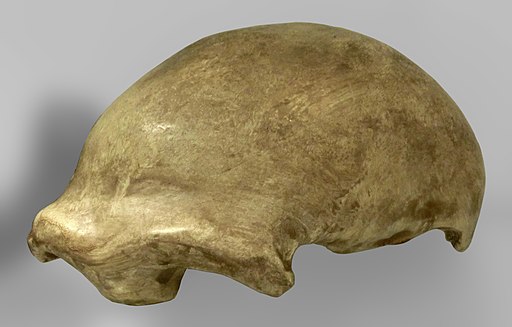
Kia ora, For this post I've decided to focus on our evolutionary cousins the Neanderthals , who have been mentioned a few times in recent posts. Please note: this post contains a picture of a modern human skull. This has been included to visually illustrate the morphological differences from Neanderthals.   The first hominin fossils recognised as something distinct from  Homo sapiens (the scientific classification of all extant humans) were recovered in 1856 during quarrying of Feldhofer Cave in what was at the time the Kingdom of Prussia (now Germany). The location of the cave - the Neander 'thal' (valley) - would lend its name to a new scientific species classification, Homo neanderthalensis - referred to colloquially as Neanderthals or, alternatively, Neandertals . Why are there the two different spellings? In the early twentieth century German spelling was regularised to be more consistent with pronunciation and 'thal' became 'tal' (in German the wor...

Archaeological Methods - Zooarchaeology

Image
Kia ora, In my last post to this blog , I noted that one of the key differences between archaeological and pseudoarchaeological interpretations of the past is that established archaeological interpretations are the result of inductive reasoning  (i.e. conclusions are built from the 'bottom-up', based on (all) the available data), while pseudoarchaeological interpretations rely on data that has been selectively sampled to support the claims that are being made.  That's not to claim that archaeological interpretations are never wrong! But there is an important distinction that needs to be made between blatantly biased data selection and/or manipulation leading to incorrect interpretations (that is, pseudoarchaeology) and an interpretation that proves to be incorrect as a result of additional research and new data. Many areas of Oceania, for instance, are largely archaeological ' terra incognita ' (unknown land) and it is expected that as these areas are explored...

The Importance of Context in Archaeology

Image
In my last post I mentioned the importance of context to archaeological research. That is, knowing PRECISELY where an object was found and its relationship to other objects in the archaeological record.  The goal of archaeology is to understand past human behaviour and how that behaviour changes over time. The primary (and in some cases, the only!) source of evidence available to help achieve this goal is the archaeological record, or the material record of that behaviour. So, how do archaeologists get from ruins, pieces of dirty stone and pottery and patterns of dark patches in the soil to an understanding of human behaviour in the past and how this changes over time? This is where context is important!   To recap from the last post - Excavation, the principal method of data acquisition in archaeology, involves the systematic uncovering of archaeological remains through the removal of the deposits of soil and other material covering them and accompanying them. Two ...

To Excavate or Not To Excavate?

Image
The traditional image of archaeology is that of excavation, or digging! An archaeological excavation in progress. Excavation of a commoner’s house at the Aztec city of Calixtlahuaca, Mexico. Source Image here . Indeed, excavation is a key component of archaeological research. It is the principal method of data acquisition in archaeology, involving the systematic uncovering of archaeological remains through the removal of the deposits of soil and the other materials covering them and accompanying them (Renfrew & Bahn 2008: 580). A problem with archaeological excavation, however, is that it comes at a significant cost! To give one example, in my last post I talked about the ancient Roman towns of Pompeii and Herculaneum, buried by the eruption of Mt Vesuvius in AD 79. An exceptional level of preservation has allowed us some remarkable insights into life in the Roman Empire in the first century AD. However, these insights, as well as the economic benefits derived from touri...