Posts

Showing posts with the label Archaeological science

The Neanderthals in focus
Image
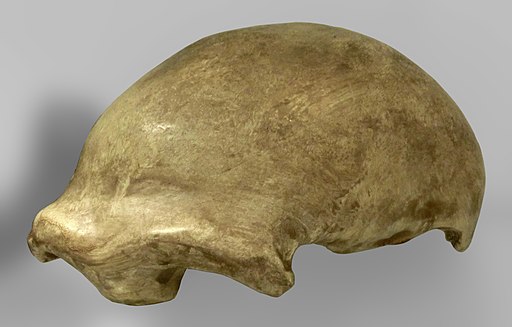
Kia ora, For this post I've decided to focus on our evolutionary cousins the Neanderthals , who have been mentioned a few times in recent posts. Please note: this post contains a picture of a modern human skull. This has been included to visually illustrate the morphological differences from Neanderthals.   The first hominin fossils recognised as something distinct from  Homo sapiens (the scientific classification of all extant humans) were recovered in 1856 during quarrying of Feldhofer Cave in what was at the time the Kingdom of Prussia (now Germany). The location of the cave - the Neander 'thal' (valley) - would lend its name to a new scientific species classification, Homo neanderthalensis - referred to colloquially as Neanderthals or, alternatively, Neandertals . Why are there the two different spellings? In the early twentieth century German spelling was regularised to be more consistent with pronunciation and 'thal' became 'tal' (in German the wor...

Archaeological Methods - Zooarchaeology

Image
Kia ora, In my last post to this blog , I noted that one of the key differences between archaeological and pseudoarchaeological interpretations of the past is that established archaeological interpretations are the result of inductive reasoning  (i.e. conclusions are built from the 'bottom-up', based on (all) the available data), while pseudoarchaeological interpretations rely on data that has been selectively sampled to support the claims that are being made.  That's not to claim that archaeological interpretations are never wrong! But there is an important distinction that needs to be made between blatantly biased data selection and/or manipulation leading to incorrect interpretations (that is, pseudoarchaeology) and an interpretation that proves to be incorrect as a result of additional research and new data. Many areas of Oceania, for instance, are largely archaeological ' terra incognita ' (unknown land) and it is expected that as these areas are explored...

Insights into the Trans-Atlantic Slave Trade

Image
The following post is an interesting study that has recently come to my attention and continues a theme from my last post on the Archaeology of the Irish Diaspora . Increasingly, genetic studies are becoming an important source of potential information about the human past. As noted in my last post, a diaspora is a specific type of mass relocation of people, defined by Brighton and Orser (2006: 64) as "the forced dispersal or scattering of people from a homeland as the result of famine, war, enslavement, ethnic cleansing, conquest, and political repression." Such movements are permanent and multi-generational. To give one prominent example, between about 1500 and 1850 AD, more than 12 million enslaved Africans were shipped to the Americas as part of the trans-Atlantic slave trade. Certainly there can be little doubt of the impact that this event has had on modern demographics. Captives being brought on board a slave ship on the West Coast of Africa (Slave Coast). Wood engrav...

Bits and Bobs of Interest

The Amphipolis Tomb In my last post I reported that the results of the analysis of the bones from the tomb at Amphipolis, Greece had been announced. This, predictably, has led to a tidal wave of speculation about the identities of the five individuals. Speculation on this topic will continue for some time, and perhaps there will never be definitive answers. Alas, that is the nature of the beast. I think the following quote sums things up quite nicely actually: "Archaeology is like a jigsaw puzzle, except that you can't cheat and look at the box, and not all the pieces are there." More here . Applying Archaeology to Today's World: Part 2 A couple of posts back I started looking at how the findings of archaeological research might be applied to understanding contemporary issues and problems. Here is another relevant example: a review of an interesting looking book written by Eric H. Cline , a Professor of Classics and Archaeology at The George Washington Un...