Posts

Showing posts with the label Palaeolithic Archaeology

A(nother) Long Overdue Update!

Image
Kia ora, Those of you that have previously visited this blog have likely noticed a repeated theme - human origins - a long held interest of mine. You possibly also have noticed that it has been a while since I last posted. In the last couple of years there have been some major changes in my life. I decided to finally take the step to pursue my interest in human origins further by moving to Melbourne, Australia to undertake a PhD at La Trobe University. The focus of my PhD research, now into its second year, is on the early archaeological record of the southern Arabian Peninsula (specifically, the modern Sultanate of Oman) and the role of this region in 'Out of Africa' human dispersals, and is being undertaken as part of the LARiO (La Trobe Archaeological Research in Oman) project - an international and interdisciplinary research collaboration. This project is co-directed by my principal PhD supervisor at La Trobe University, Dr Matthew Meredith-Williams , and is currently being...
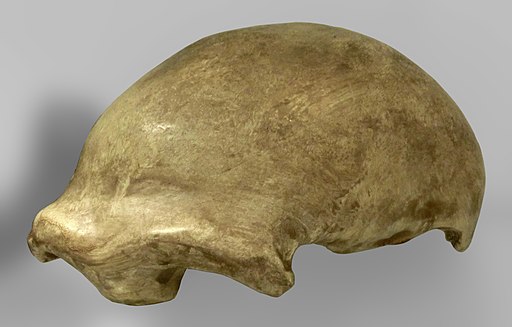
The Neanderthals in focus

Image
Kia ora, For this post I've decided to focus on our evolutionary cousins the Neanderthals , who have been mentioned a few times in recent posts. Please note: this post contains a picture of a modern human skull. This has been included to visually illustrate the morphological differences from Neanderthals.   The first hominin fossils recognised as something distinct from  Homo sapiens (the scientific classification of all extant humans) were recovered in 1856 during quarrying of Feldhofer Cave in what was at the time the Kingdom of Prussia (now Germany). The location of the cave - the Neander 'thal' (valley) - would lend its name to a new scientific species classification, Homo neanderthalensis - referred to colloquially as Neanderthals or, alternatively, Neandertals . Why are there the two different spellings? In the early twentieth century German spelling was regularised to be more consistent with pronunciation and 'thal' became 'tal' (in German the wor...