Posts

Showing posts with the label Palaeoanthropology

More ponderings about proteins
Image
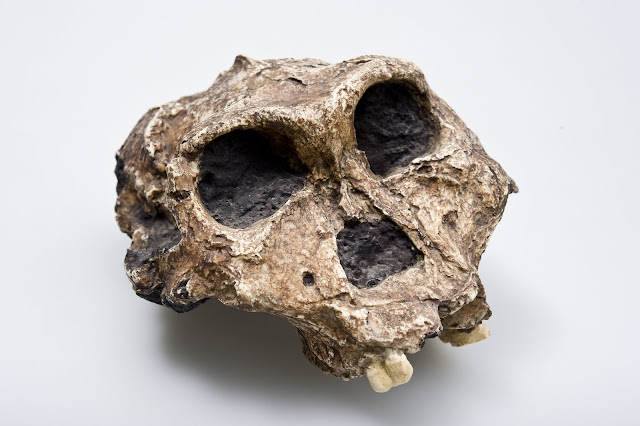
Kia ora, Update (June 2025): Since this post was originally published in 2023, the preprint paper it refers to has gone through the peer review process and has now been published in the journal Science .  In April 2020 I published a post to this blog entitled " New Insights into Human Origins - Part 1 ", in which I discussed a research paper that had reported the sequencing of enamel proteins from an ca. 800,000 year old hominin  tooth recovered from the Gran Dolina cave in the Atapuerca mountains in Spain. These proteins were about twice as old as what was then, and still is, the oldest hominin DNA ever sequenced. As I explained in that 2020 post: " Proteins are biomolecules consisting of chains of organic compounds called amino acids that are assembled using information encoded in DNA, so the more similar two species' DNA is, the more similar we would expect the composition of their proteins to be. Proteins slower rate of degradation compared to DNA presents the ...
The Neanderthals in focus

Image
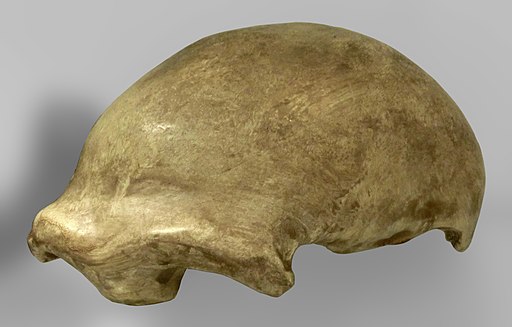
Kia ora, For this post I've decided to focus on our evolutionary cousins the Neanderthals , who have been mentioned a few times in recent posts. Please note: this post contains a picture of a modern human skull. This has been included to visually illustrate the morphological differences from Neanderthals.   The first hominin fossils recognised as something distinct from  Homo sapiens (the scientific classification of all extant humans) were recovered in 1856 during quarrying of Feldhofer Cave in what was at the time the Kingdom of Prussia (now Germany). The location of the cave - the Neander 'thal' (valley) - would lend its name to a new scientific species classification, Homo neanderthalensis - referred to colloquially as Neanderthals or, alternatively, Neandertals . Why are there the two different spellings? In the early twentieth century German spelling was regularised to be more consistent with pronunciation and 'thal' became 'tal' (in German the wor...

To be or not to be (a species)?

Image
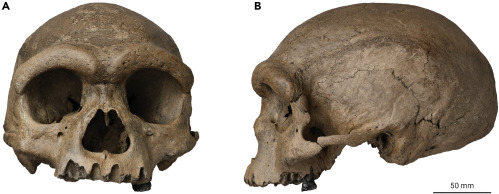
Kia ora, In my last post to this blog I wrote a bit about the Harbin skull, a remarkable fossil find made more than 80 years ago in the city of Harbin in China's Heilongjiang province and that was first announced to the scientific community last year in three papers  published in the same issue of the scientific journal 'The Innovation' ( Qiang Ji et al. 2021 ;  Qingfeng Shao et al. 2021 ;  Xijun Ni et al. 2021 ) . The cranium is almost complete, but with only one tooth - a huge second molar - and is massive in size, with an endocranial volume of about 1420 ml (larger than the average for modern Homo sapiens - our own species !). Other morphological traits include a prominent  supraorbital torus (brow ridge), a very  broad (wide) yet orthognathic (flat) face  with large, almost  square  eye sockets, a large nasal opening and delicate zygomatic (cheek) bones, and a  cranial vault that   is low and elongated  when viewed side on...

New Insights into Human Origins - Part 3

Image
Kia ora, It's hard to believe that another year has drawn to a close. With regards to the contemporary world, 2021 was certainly a year that presented many challenges as the global COVID-19 pandemic continued. However, I don't want to continue to dwell on all of that in today's post - but instead provide a brief and hopefully interesting respite by looking back to hundreds of thousands of years ago. As I have previously mentioned on this blog a keen area of interest of mine is the study of human origins and despite global restrictions on travel and fieldwork last year, there was a whole heap of relevant research reported in 2021. What would I pick as my favourites? It really is hard for me to go past what I consider to be an outstanding technological and methodological achievement - a " 'game changer' in the field" as I described it in a post back in April 2021 - the successful extraction and analysis of nuclear DNA from a number of species, including h...

Our Evolutionary Past: Branches Through Time

Image
Kia ora, This past weekend I took advantage of a quiet Saturday and headed along to ' Our Evolutionary Past: Branches through Time ', a new temporary exhibit that had just opened at the local Otago Museum.  ( Note: In this blog post I have included a number of hyperlinks that you can follow for more information, including links to original research papers. Unfortunately, however, many of the research papers I refer to are behind paywalls! ) This free exhibit, scheduled to run until June 10 2021,  focuses on some key themes in human evolution, such as the emergence of uniquely human traits like obligate bipedalism (walking on two legs as our primary method of getting around) and manual dexterity (the ability to use our hands to preform extremely fine movements such as writing or threading a needle by precisely grasping and manipulating objects). Highly accessible educational content combined with some great artwork by Dunedin artist Bruce Mahalski is showcased on massive floor-...